An improved method for deriving stem cells shortens the time to just a few weeks(rather than months)—changing how scientists can study stem cells, fertility, and mitochondrial health. Developed at Bedford Research Foundation and presented in an award-winning research poster, this faster method for creating mouse embryonic stem cells has already revealed unexpected patterns in how…
Search in library posts
The study, titled “Ambient Temperature Transport of Human Oocytes: An Unexpected Research Resource,” explored the potential of immature oocytes from young egg donors at The World Egg and Sperm Bank in Phoenix, AZ. A total of 432 oocytes, collected from controlled ovarian stimulation cycles, were shipped overnight in a specialized transport medium designed to mimic…
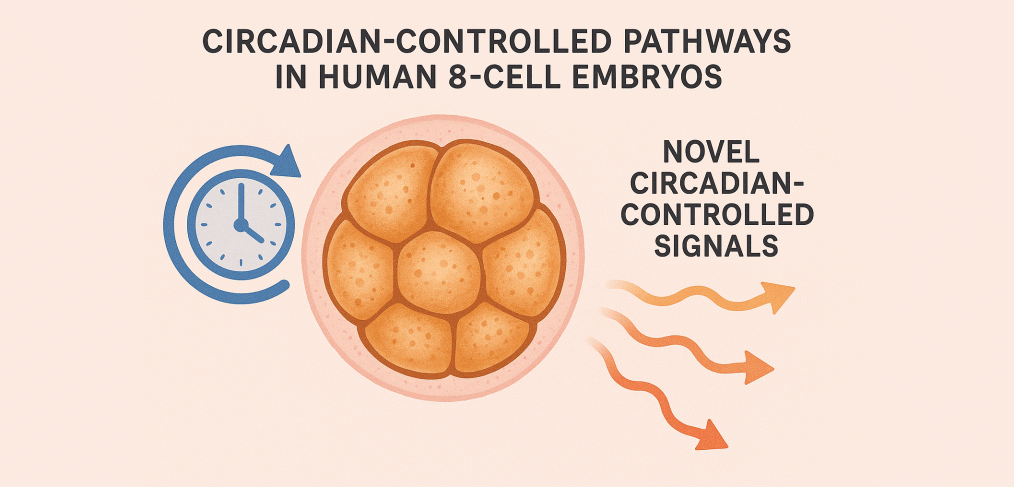
Our circadian rhythm studies continue to reveal unique characteristics of activated eggs. Research published in early 2024 by BRF scientists describes circadian-controlled pathways not previously known to function in activated human eggs. As a consequence, novel circadian-controlled signals released by the embryo have now been discovered. These findings add to the growing evidence that biological…
As BRF scientists expand their access to research eggs, new findings from the broader scientific community are offering additional insights. One such development is the possible role of zinc in egg activation. For many years, calcium ions have been known to play an important role in egg activation across many species and have been central…
On the order of half of the human eggs collected during fertility procedures are not robust enough for reproductive use and are discarded by egg banks. BRF scientists developed a new human egg transport system that makes it possible to rescue and study these otherwise lost eggs for stem cell research. As egg freezing has…
Independent Research is in Our DNA The need for independent research has never been more evident. At the Bedford Research Foundation, the decades-old ban on federally funded stem cell research forced us to forge our own path—one that isn’t tied to federal funding. Now, as the important work of so many of our fellow researchers is…
Bedford Research Foundation scientists publish the latest CMV (cytomegalovirus) research data in the European Society of Medicine Journal. Between April 2020 and March 2022, BRF collected 453 semen specimens from 156 HIV-infected men. The men were seeking specialized HIV PCR testing for semen provided by SPAR (the Special Program of Assisted Reproduction). Through SPAR, semen…
Read More›Nature does not regard fertilized human eggs as children. Nature’s stringent biological requirements of a fertilized egg leads to miscarriage far more often than successful pregnancy. Fewer than 10% of eggs fertilized in fertility clinics have the biological potential to develop into a child. Nature has evolved rigorous developmental milestones to avoid wasting precious maternal…
Read More›[Check out this month’s Science Highlights “Fertilized Eggs Versus Embryos, An Ongoing Failure of Terminology.] In light of the recent news from Alabama, we are reposting “What Is An Embryo?”. This is the first comprehensive look at the influence of accurate science terminology, published by the Connecticut Law Review along with rejoinders by Dr. Harold…
Read More›On October 27th, Bedford Research held the Activated Egg Symposium in Downtown Boston. This year’s topic was “Human Egg Activation: The Influence of Sperm” with Keynotes: David Keefe, MD, NYU, speaking on “Retrotransposition and early embryo development,” and Oliver Rando, PhD, UMass, speaking on “Epigenetic contributions of sperm to early development in mammals.” Dr. Rando…