
2026 Speaker Bios
November 6, 2026: “Unique Human Egg Activation Pathways”
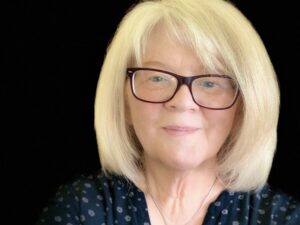
Evelyn Telfer, (BSc (Hons) PhD CBE FRSB)
Professor, Chair of Reproductive Biology, Institute of Cell Biology, School of Biological Sciences, University of Edinburgh
Talk Title: TBD
Professor Evelyn Telfer heads a research group in Ovarian Development within the Institute of Cell Biology and Genes and Development Group. Her team has a particular interest in developing in vitro models to support oocyte development from immature stages in domestic species and humans. Evelyn’s group developed the first culture system that supports in vitro growth of human primordial follicles to the Metaphase II stage. They are currently using these models to study the potential of female germline stem cells isolated from adult ovaries across a range of species. She has published widely in this area and is a regular invited speaker at International meetings. Evelyn’s research is funded by the Medical Research Council, U.K. She has received numerous prestigious awards, including the “Distinguished Scientist Award 2019” from the Society of Reproduction and Fertility and the Marshall Medal from The Society of Reproduction and Fertility in 2023, in recognition of her world-leading contributions to the field of ovarian function and fertility preservation.
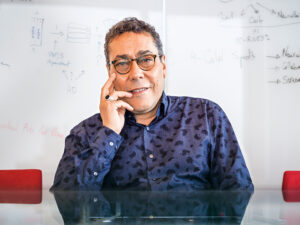
Ali H. Brivanlou, PhD
Robert and Harriet Heilbrunn Professor of Stem Cell Biology and Molecular Embryology, Laboratory of Stem Cell Biology and Molecular Embryology, The Rockefeller University
Talk Title: TBD
Professor Ali H. Brivanlou is a leading developmental biologist whose research explores the molecular and cellular basis of early human development. His research team uses high-resolution quantitative approaches that span both theoretical physics and molecular embryology and employs in vitro-attached human embryos and genome-edited, stem cell-derived embryonic models to investigate embryonic induction and the emergence of key structures in the early embryo. Professor Brivanlou’s research focuses in particular on the emergence of the human brain and on modeling neurodegenerative diseases. He has received numerous honors for his research and teaching and is widely recognized for his leadership in stem cell and embryology research. Notable among his awards are the Irma T. Hirschl/ Monique Weill-Caulier Trusts Career Scientist Award, the Searle Scholar Award, and the James A. Shannon Director’s Award from the NIH.
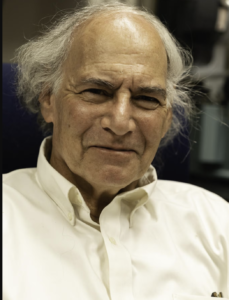
Jonathan van Blerkom, PhD
Research Professor, Department of Molecular, Cellular & Developmental Biology, University of Colorado, Boulder
Talk Title: TBD
Professor Jonathan van Blerkom is a distinguished expert in reproductive biology whose research has focused on the molecular and cellular basis of early mammalian development, particularly the biology of human follicles, oocytes, and embryos. His work has advanced our understanding of fertilization failure, sperm-oocyte membrane interactions, developmental competence, and the role of mitochondria in early development. He also helped develop a simplified, low-cost culture system for human in vitro fertilization that has broadened access to fertility treatment worldwide. Dr. van Blerkom performed Colorado’s first successful IVF procedure in 1982 and has held senior academic and clinical leadership positions at the University of Colorado and Rose Medical Center. He is widely recognized internationally for his contributions to reproductive medicine and developmental biology.
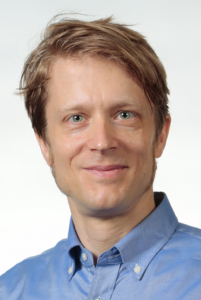
Dietrich M. Egli, PhD
Associate Professor of Developmental Cell Biology, Pediatrics and Obstetrics & Gynecology, Columbia University Irving Medical Center
Talk Title: “A stressful beginning – Genome stability in the mammalian embryo”
Dr. Dietrich M. Egli studies genome stability in early development. His laboratory uses early mammalian embryos, pluripotent stem cells, and genomic engineering approaches to investigate the molecular mechanisms that shape developmental competence and disease-associated variation. His research has shown that difficult-to-replicate regions of the genome can lead to DNA breaks, genetic change, and developmental failure, and that these same fragile sites influence the cell cycle, differentiation, and reprogramming in stem cell systems. Dr. Egli earned his PhD from the University of Zurich and completed postdoctoral training at Harvard University. He has received numerous honors recognizing his contributions to stem cell biology and developmental science.
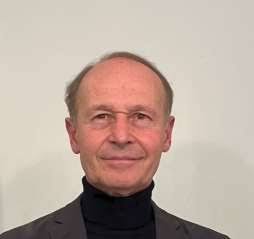
Rafael Fissore, PhD, DVM
Reproduction and Development Faculty, Department of Veterinary and Animal Sciences, University of Massachusetts, Amherst
Talk Title: “Egg Activation and Early Development: Orchestrating Multiple Ion Channels and Divalent Cations”
Dr. Rafael Fissore is an internationally recognized reproductive biologist who studies the molecular regulation of egg activation and the earliest stages of embryo development. His work focuses on the mechanisms that govern fertilization, developmental competence, and infertility. He has made key advancements towards our understanding of the calcium oscillations triggered at fertilization, including the role of the sperm-derived factor phospholipase C zeta and the ion channels that regulate calcium and divalent cation homeostasis during oocyte maturation and early embryogenesis. His accolades at UMASS include Distinguished Faculty Lecturer and the Chancellor’s Medal.
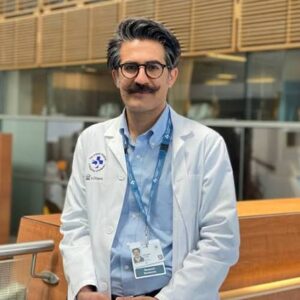
Ehsan Habibi, PhD
Assistant Professor, Department of Cellular and Molecular Medicine, Ottawa Hospital Research Institute, University of Ottawa
Talk Title: TBD
Dr. Ehsan Habibi leads a multidisciplinary research program focused on understanding how multicellular systems form and self-organization occurs during early development. His laboratory combines stem cell biology, bioengineering, computational biology, transcriptomics, imaging, and mechanics to build synthetic stem cell-derived models that capture key features of embryonic development. By comparing these models with their natural counterparts, his group is developing new frameworks for synthetic developmental biology and regenerative medicine. Prior to joining the Ottawa Hospital Research Institute, Dr. Habibi was a postdoctoral fellow at the Broad Institute, where he contributed to major advances in understanding cerebral cortex development and pioneered new methods for studying spatial transcriptomics, cellular mechanics, and three-dimensional cell geometry at single-cell resolution.
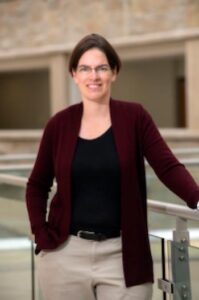
Vicki P. Losick, PhD
Associate Professor, Biology Department, Boston College
Talk Title: “The role and regulation of polyploidy in health and disease”
Dr. Vicki P. Losick studies the genetic and cellular mechanisms of polyploidy. Polyploidy is the more than doubling of a cell’s diploid genome, which can arise by incomplete cell cycles or by cell fusion. Her research group studies the role and regulation of polyploidy in health and disease with focus on wound healing and aging. Using fruit fly as a model, her lab has identified several conserved signaling pathways, including Hippo and JNK that control the extent of polyploid cell growth. Her lab also identified beneficial roles for polyploidy in wound repair by enabling healing in the presence of genotoxic stress and restoring mechanical tension post injury. Since starting her lab, she has received several early career awards combining her interests in research and teaching at Boston College.
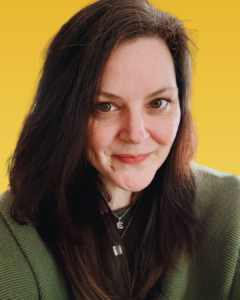
Elizabeth Carr
Known as America’s first IVF baby, Elizabeth has spent more than four decades helping people understand the human side of reproductive medicine and scientific innovation.
Professionally, she has led marketing, public relations, and patient advocacy efforts for organizations across healthcare and technology, including Genomic Prediction and TMRW Life Sciences. Her career has also included leadership roles in journalism, nonprofit management, digital media, and community engagement, with positions at Runner’s World, Boston.com, and Back on My Feet Boston. Elizabeth Carr is a nationally recognized speaker, author, patient advocate, and communications leader whose work sits at the intersection of science, healthcare, media, and humanity.